
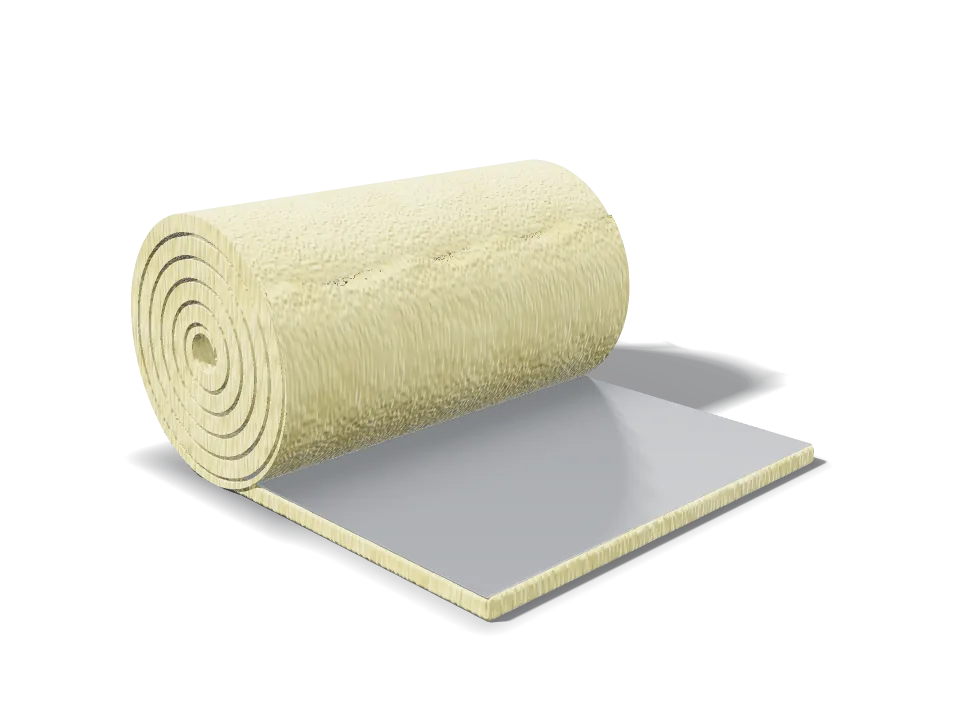
 HS 70198000Illustrative render
Glass Wool Roll & Blanket
Thermal + acoustic
Versatile insulation roll used for AC ducting, false ceilings, and combined acoustic + thermal applications across a wide temperature range.
Also known as: fiberglass insulation roll, glass wool blanket, FRK faced glass wool, acoustic glass wool
- Works across both hot and cold duct applications
- Good sound absorption alongside thermal insulation
- Multiple facing options (plain, foil, fabric)
Technical data
| Roll Size | 1.2 m width x variable length (bundled) |
|---|---|
| Thickness Options | 25 / 50 / 75 / 100 mm |
| Density | 16 - 48 kg/m³ |
| Temperature Range | -10°C to +230°C (used both hot & cold duct) |
| Thermal Conductivity | 0.032 - 0.040 W/mK |
| Facing | Plain / Foil-faced (FRK) / Fabric-faced |
| Sound Absorption (NRC) | 0.85 - 0.95 |
| Fire Rating | Non-combustible, Class A1 |
| Standards | ASTM C553, EN 13162, IS 8183 |
| Packing | Compressed rolls, poly-wrapped |
Applications
Standards
Manufacturer test certificates and data sheets can be supplied with the order on request.
Customs
Export packing
Compressed rolls, poly-wrapped. Loads are palletized or cartoned for ocean freight and can be consolidated with other products in one container.
Questions buyers ask
What is glass wool roll insulation used for?
Glass wool roll and blanket is a flexible fiber insulation used for AC ducting, false ceilings and combined thermal and acoustic insulation. It is made from fine glass fibers bonded into a resilient mat, which traps air to slow heat flow and gives a sound absorption coefficient (NRC) of 0.85 to 0.95. It is supplied plain or with foil (FRK) or fabric facings, so the same material can serve both duct wrap and ceiling applications.
What temperature can glass wool blanket withstand?
Glass wool roll and blanket is rated from -10°C to +230°C, which covers both chilled and warm air ducts. The upper limit is set by the binder and glass fibers, so it is not intended for high-temperature process equipment. For hotter surfaces, Rockwool LRB Roll or Ceramic Fiber Blanket & Board is the usual alternative from this catalogue.
What thickness and density of glass wool should I use?
Glass wool roll is available in 25, 50, 75 and 100 mm thicknesses and densities of 16 to 48 kg/m³, in 1.2 m wide rolls of variable length. Lower densities are typical for ceiling and light duct wrap, while higher densities give better resilience and acoustic performance. On chilled ducts, thickness is set to prevent condensation; the heat-loss calculator on this site helps check surface temperature.
Should I use Glass Wool Roll & Blanket or Rockwool LRB Roll?
Use Glass Wool Roll & Blanket for AC ducting, ceilings and acoustic work up to +230°C, and Rockwool LRB Roll for hotter piping, tanks and equipment. Glass wool is lighter and suits HVAC and building services. Rock wool is made from stone fibers and is chosen where the surface temperature exceeds the glass wool rating or where higher density industrial insulation is needed.
Is glass wool non-combustible?
Yes, glass wool roll and blanket is non-combustible and classified Class A1. The fibers themselves do not burn, which makes the material suitable for ducts and ceiling voids where fire behavior matters. Facings such as foil or fabric can influence the classification of the finished product, so if your specification names a fire rating for a faced roll, state it in your enquiry.
How is glass wool installed on AC ducts?
On AC ducts, glass wool is wrapped around the duct with a foil (FRK) facing outward, and all joints are sealed with Aluminum Foil Tape to form a continuous vapor barrier. On chilled ducts this barrier is essential, because any gap lets moist air condense inside the insulation. Pins, adhesive such as Contact Adhesive, or bands hold the blanket in place on larger ducts.
Which standards does glass wool roll conform to?
Glass wool roll and blanket conforms to ASTM C553, EN 13162 and IS 8183. ASTM C553 covers mineral fiber blanket insulation for commercial and industrial use, EN 13162 covers factory-made mineral wool products for buildings, and IS 8183 is the Indian specification for bonded mineral wool. Tell us which standard your project uses so it can be confirmed with your quotation.
What HS code is used when exporting glass wool rolls?
Glass wool rolls and blankets are exported under HS code 70198000, the Indian tariff line for glass wool and articles of glass wool. The chapter 70 heading places it with glass products rather than plastics or mineral wool, which is a common point of confusion for importers. Your customs broker should confirm the national subheading and duty rate at the destination.
How are glass wool rolls packed and shipped?
Glass wool rolls are shipped compressed and poly-wrapped, which reduces volume for sea freight and protects them from moisture. The rolls recover their thickness after unpacking, although storage should be dry and under cover. Quantities are usually counted in square meters at a given thickness and density, so state those, plus facing and destination port, in your enquiry.
Export markets
We ship Glass Wool Roll & Blanket to buyers worldwide. Country pages cover ports, standards and documents:
Complete the system.
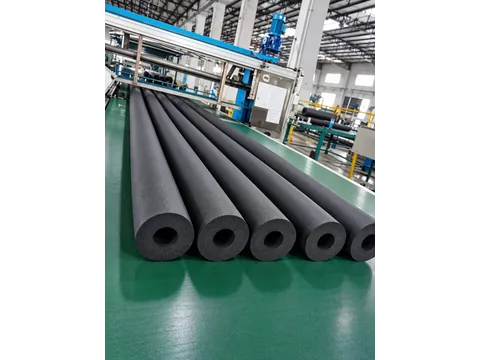
Nitrile Rubber Tube
Closed-cell elastomeric
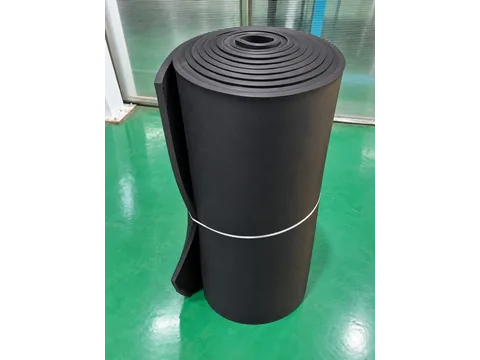
Nitrile Rubber Sheet & Roll
Plain or self-adhesive
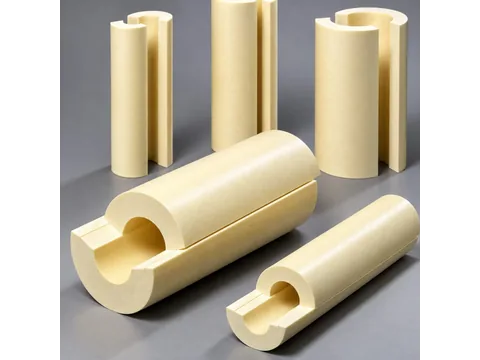
PUF Pipe Section & Board
Polyurethane foam, to −180°C

Contact Adhesive
For nitrile rubber insulation
Need Glass Wool Roll & Blanket shipped?
Tell us the size, thickness, grade and quantity with your destination port. We reply with a priced export offer, packing details and documents.