
 HS 69022020
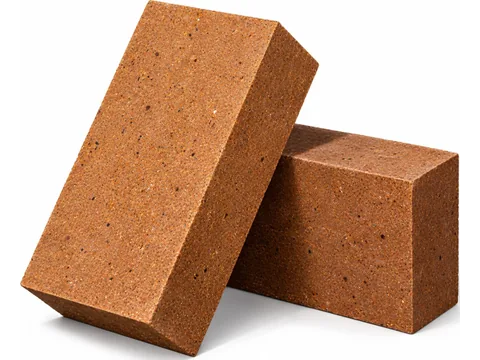
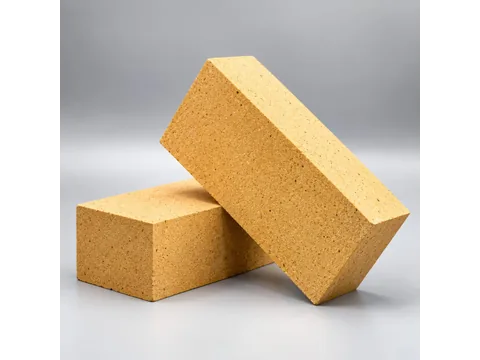
High Alumina Bricks
Al₂O₃ 45–90%
Higher-grade refractory brick with increased alumina content, used where higher temperature and better slag resistance is needed.
Also known as: alumina refractory brick, 70% alumina brick, high alumina fire brick
- Higher Al2O3 content grades: 45%, 60%, 70%, 80%, 90%
- Better slag & abrasion resistance than fire clay
- Used in high-duty furnaces and reheating furnaces
Technical data
| Standard Size | 230 x 114 x 75 mm (standard shape) |
|---|---|
| Grades Available | Al2O3 45% / 60% / 70% / 80% / 90% |
| Max Service Temperature | 1500°C - 1750°C (grade dependent) |
| Bulk Density | 2.3 - 2.9 g/cm³ |
| Cold Crushing Strength | 400 - 700 kg/cm² |
| Apparent Porosity | 16% - 22% |
| Refractoriness Under Load (RUL) | >1500°C |
| Standards | IS 6, ASTM C27 |
| Packing | Wooden pallets, shrink-wrapped |
Applications
Standards
Manufacturer test certificates and data sheets can be supplied with the order on request.
Customs
Export packing
Wooden pallets, shrink-wrapped. Loads are palletized or cartoned for ocean freight and can be consolidated with other products in one container.
Questions buyers ask
What are high alumina bricks?
High alumina bricks are refractory bricks containing 45 to 90% alumina (Al2O3), used where temperatures and slag or abrasion are too severe for fire clay. The higher alumina content raises refractoriness and strength. Typical uses include reheating furnaces, cement kilns, glass furnaces and ladles, where they line the hot face exposed to the most demanding conditions.
What is the maximum temperature of high alumina bricks?
High alumina bricks have a maximum service temperature of 1500°C to 1750°C, depending on the alumina grade, and a refractoriness under load above 1500°C. Higher-alumina grades sit at the upper end of this range. The actual limit in service also depends on atmosphere, slag chemistry and load, so the grade should be selected for the specific furnace zone.
Which alumina grades are available and how do I choose?
High alumina bricks are available in 45%, 60%, 70%, 80% and 90% Al2O3 grades, all in the standard 230 x 114 x 75 mm size. Lower grades suit general high-duty linings; higher grades are chosen for hotter zones and stronger slag or abrasion. Selection should be based on operating temperature, slag type and cost, so share these details in your enquiry.
When should I use High Alumina Bricks instead of Fire Clay Bricks?
Use High Alumina Bricks instead of Fire Clay Bricks when the lining operates above about 1400°C or faces slag and abrasion that would wear fire clay quickly. High alumina bricks serve up to 1500°C to 1750°C with cold crushing strength of 400 to 700 kg/cm², versus 250 to 400 kg/cm² for fire clay.
What are the physical properties of high alumina bricks?
High alumina bricks have a bulk density of 2.3 to 2.9 g/cm³, cold crushing strength of 400 to 700 kg/cm², apparent porosity of 16 to 22% and refractoriness under load above 1500°C. The lower porosity and higher density compared with fire clay reduce slag penetration and improve abrasion resistance in high-duty furnaces.
How are high alumina bricks installed?
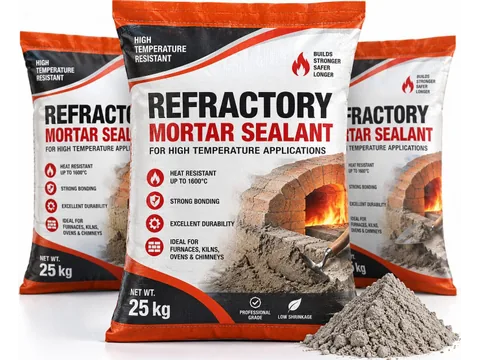
High alumina bricks are laid with a matching high-alumina Refractory Mortar in thin, staggered joints, with expansion allowances as per the furnace design. The mortar should be compatible with the brick chemistry to avoid weak joints. After installation, the lining needs a controlled heat-up schedule, and backup insulation such as Insulating Fire Bricks (IFB) is commonly used behind the hot face.
Which standards are high alumina bricks made to?
High alumina bricks are made to IS 6, the Indian standard for high alumina refractory bricks, and ASTM C27, which classifies fireclay and high-alumina refractory brick. Both standards group bricks by alumina content and related properties. State the grade and standard your specification calls for in the enquiry so it can be confirmed with the quotation.
Under which HS code are high alumina bricks exported?
High alumina bricks are exported from India under HS code 69022020, refractory bricks and shapes of high alumina. This falls under heading 6902, which covers refractory bricks, blocks and tiles, with alumina content determining the subheading. The importing country assigns its own national digits and duty, so verify the code with your customs broker.
How are high alumina bricks shipped and ordered?
High alumina bricks are shipped on wooden pallets, shrink-wrapped, from Nhava Sheva or Mumbai in FCL or LCL loads. They are dense, so container loads are limited by weight rather than volume. In your enquiry, give the alumina grade, shapes and quantities, any matching mortar, destination port and Incoterm; lead time and price are confirmed with the quotation.
Export markets
We ship High Alumina Bricks to buyers worldwide. Country pages cover ports, standards and documents:
Complete the system.
Need High Alumina Bricks shipped?
Tell us the size, thickness, grade and quantity with your destination port. We reply with a priced export offer, packing details and documents.