
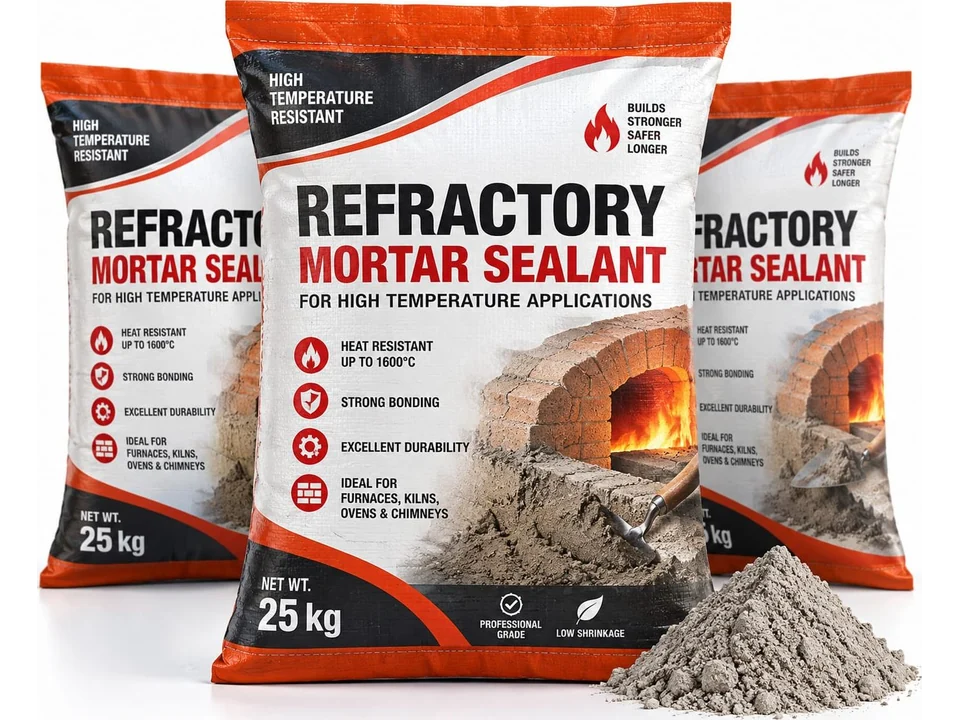
 HS 38160000
Refractory Mortar
Heat & air setting
Jointing material used between refractory bricks to bond them together and seal joints against hot gas/flame penetration.
Also known as: fire cement, high alumina mortar, refractory jointing mortar, air-setting mortar
- Air-setting grade for immediate handling strength
- Heat-setting grade develops full strength on firing
- Matched chemistry with brick type for compatibility
Technical data
| Type | Fire Clay Mortar / High Alumina Mortar / Air-Setting Mortar |
|---|---|
| Al2O3 Content | 35% - 80% (grade dependent, matched to brick type) |
| Max Service Temperature | 1300°C - 1700°C (grade dependent) |
| Form | Ready-mix paste or dry powder (add water on site) |
| Joint Thickness | 1 - 3 mm recommended |
| Setting Type | Air-setting (chemical bond) / Heat-setting (ceramic bond on firing) |
| Standards | IS 6, ASTM C199 (cone crushing test) |
| Packing | 20 / 25 kg bags or buckets (ready-mix paste) |
Applications
Standards
Manufacturer test certificates and data sheets can be supplied with the order on request.
Customs
Export packing
20 / 25 kg bags or buckets (ready-mix paste). Loads are palletized or cartoned for ocean freight and can be consolidated with other products in one container.
Questions buyers ask
What is refractory mortar used for?
Refractory mortar is a jointing material laid between refractory bricks to bond them together and seal the joints against hot gas and flame penetration. It is used when building or repairing furnace, kiln and boiler brickwork with Fire Clay Bricks, High Alumina Bricks and similar shapes, and for sealing furnace joints.
What temperature can refractory mortar withstand?
Refractory mortar is available for maximum service temperatures of 1300°C to 1700°C, depending on the grade. Fire clay mortars sit toward the lower end and high alumina mortars toward the upper end. The mortar should be rated at least as high as the bricks it joins, so it does not become the weak point in the lining.
What is the difference between air-setting and heat-setting refractory mortar?
Air-setting refractory mortar forms a chemical bond and gains handling strength as it dries, while heat-setting mortar develops its full strength through a ceramic bond when the lining is fired. Air-setting grades are useful where joints must hold before first firing; heat-setting grades suit linings that will reach high temperature across the whole joint.
How do I choose refractory mortar to match my bricks?
Choose a refractory mortar whose chemistry matches the brick: fire clay mortar for Fire Clay Bricks and high alumina mortar for High Alumina Bricks. Grades range from 35% to 80% Al2O3, and matching the alumina level keeps thermal expansion and chemical behavior compatible between brick and joint. Tell us the brick type and grade in your enquiry.
How thick should refractory mortar joints be?
Refractory mortar joints of 1 to 3 mm are recommended. Thin joints reduce the amount of weaker jointing material in the hot face and limit paths for gas and flame penetration. Bricks should be dipped or buttered so the joint is fully filled, with excess mortar removed before it sets.
Is refractory mortar supplied ready-mixed or as powder?
Refractory mortar is supplied either as a ready-mix paste or as a dry powder that is mixed with water on site. Ready-mix paste is convenient for smaller jobs and repairs, while dry powder is practical for large brickwork and longer storage. Mix powder to a consistency that allows thin 1 to 3 mm joints.
Which standards apply to refractory mortar?
Refractory mortar in this catalogue is referenced to IS 6 and ASTM C199. Grades are selected by service temperature and alumina content to suit the brick type. If you need particular test documentation for your order, mention it in your enquiry and we will confirm what is available.
Which HS code is used when importing refractory mortar?
Refractory mortar is classified under HS code 38160000, the heading for refractory cements, mortars, concretes and similar compositions. It shares this code with Castable Refractory and Ramming Mass, while refractory bricks are classified separately, which is worth noting when preparing documents for a mixed refractory shipment.
How is refractory mortar packed, and can it ship with bricks?
Refractory mortar is packed in 20 kg or 25 kg bags, or in buckets for ready-mix paste. It can be loaded in the same container as Fire Clay Bricks, High Alumina Bricks or other refractory and insulation products, shipped FCL or LCL from Nhava Sheva (JNPT) or Mumbai. Quantities are usually estimated from the number of bricks and the joint thickness.
Export markets
We ship Refractory Mortar to buyers worldwide. Country pages cover ports, standards and documents:
Complete the system.
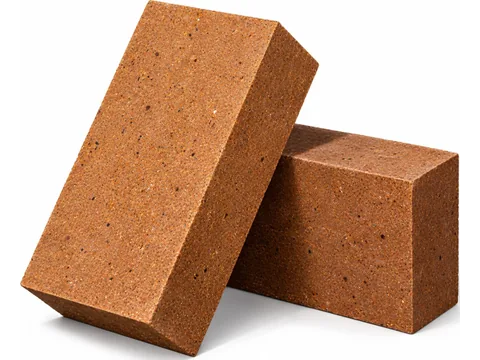
Fire Clay Bricks
Al₂O₃ 30–42%
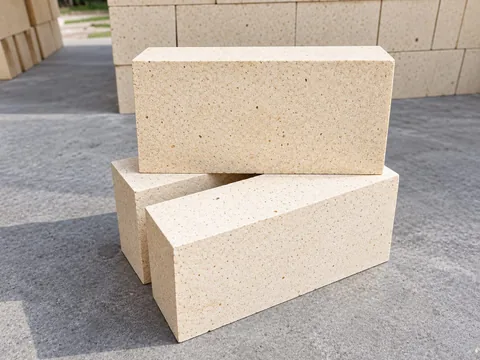
High Alumina Bricks
Al₂O₃ 45–90%
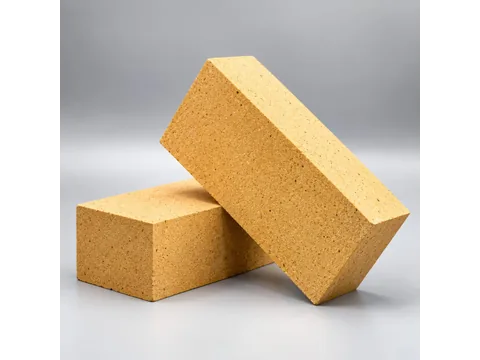
Insulating Fire Bricks (IFB)
SK-23 to SK-32 grades
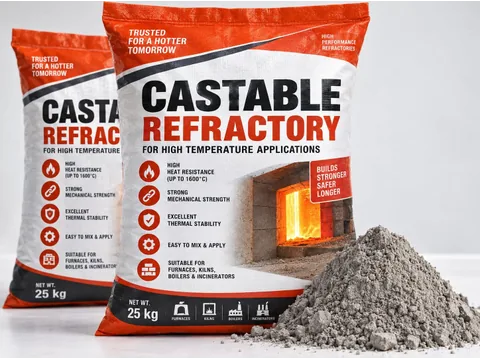
Castable Refractory
LCC, high alumina & insulating
Need Refractory Mortar shipped?
Tell us the size, thickness, grade and quantity with your destination port. We reply with a priced export offer, packing details and documents.