
 HS 69029010
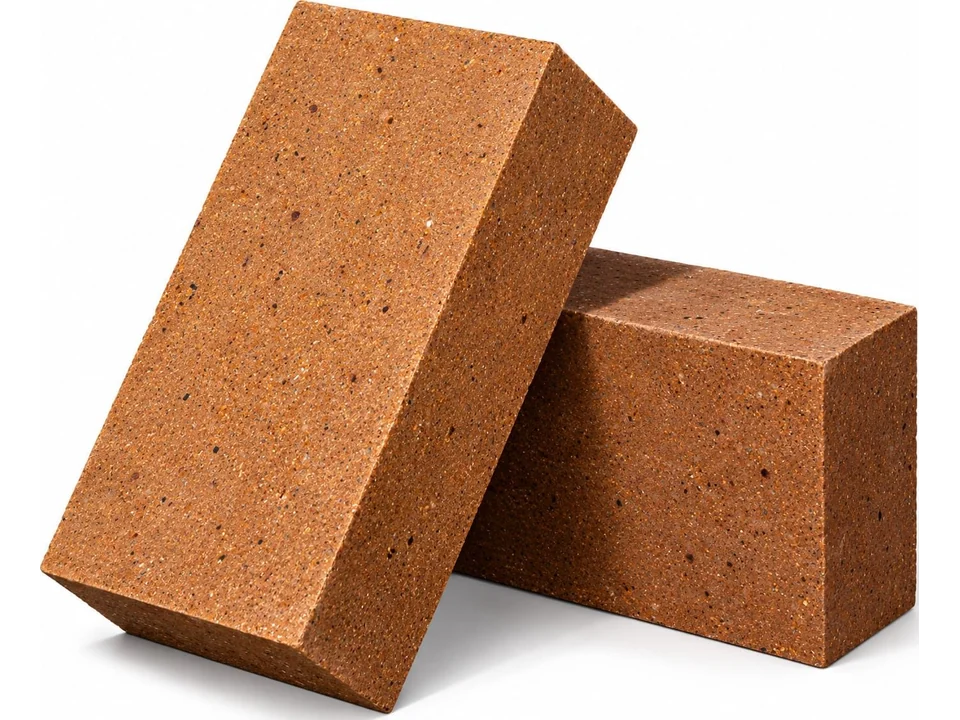
Fire Clay Bricks
Al₂O₃ 30–42%
Standard refractory brick made from fire clay, widely used for furnace linings, kilns, and boiler settings up to 1300°C.
Also known as: firebrick, refractory brick, IS 8 fire clay brick, furnace brick
- Economical general-purpose refractory brick
- Good thermal shock resistance
- Wide availability in standard shapes
Technical data
| Standard Size | 230 x 114 x 75 mm (standard shape) |
|---|---|
| Other Shapes | Arch, wedge, key, splay bricks available |
| Al2O3 Content | 30% - 42% |
| Max Service Temperature | 1300°C - 1400°C |
| Bulk Density | 1.9 - 2.1 g/cm³ |
| Cold Crushing Strength | 250 - 400 kg/cm² |
| Apparent Porosity | 18% - 24% |
| Thermal Conductivity | 0.8 - 1.0 W/mK (at 600°C) |
| Standards | IS 8, ASTM C27 |
| Packing | Wooden pallets, shrink-wrapped, ~250-300 pcs/pallet |
Applications
Standards
Manufacturer test certificates and data sheets can be supplied with the order on request.
Customs
Export packing
Wooden pallets, shrink-wrapped, ~250-300 pcs/pallet. Loads are palletized or cartoned for ocean freight and can be consolidated with other products in one container.
Questions buyers ask
What are fire clay bricks used for?
Fire clay bricks are general-purpose refractory bricks with 30 to 42% alumina, used for furnace linings, kilns, boiler settings and chimney linings. They are made from fired refractory clay and are the economical choice where temperatures and slag attack are moderate. They are also used as a backup layer behind higher-grade hot-face bricks in more demanding furnaces.
What is the maximum service temperature of fire clay bricks?
Fire clay bricks have a maximum service temperature of 1300°C to 1400°C, depending on alumina content and grade. Above this range the clay begins to soften under load, so fire clay is not suited to the hottest zones of steel or glass furnaces. Where higher temperatures or aggressive slag are expected, High Alumina Bricks are the usual upgrade.
What sizes and shapes are available for fire clay bricks?
Fire clay bricks are supplied in the standard 230 x 114 x 75 mm shape, with arch, wedge, key and splay bricks available for curved and tapered work. Arch and wedge shapes are used to build round kilns, crowns and flues without large mortar joints. Send the drawing or shape list with your enquiry so the correct mix of shapes can be quoted.
What is the difference between Fire Clay Bricks and High Alumina Bricks?
Fire Clay Bricks contain 30 to 42% alumina and serve up to 1300°C to 1400°C, while High Alumina Bricks contain 45 to 90% alumina and serve up to 1500°C to 1750°C with better slag and abrasion resistance. Fire clay is chosen for economy in moderate conditions; high alumina is chosen for reheating furnaces, cement kilns, glass furnaces and ladles.
What are the physical properties of fire clay bricks?
Fire clay bricks have a bulk density of 1.9 to 2.1 g/cm³, cold crushing strength of 250 to 400 kg/cm², apparent porosity of 18 to 24% and thermal conductivity of 0.8 to 1.0 W/mK at 600°C. Their moderate porosity gives good thermal shock resistance, which suits kilns and boilers that heat and cool regularly.
How are fire clay bricks laid in a furnace?
Fire clay bricks are laid with thin joints of Refractory Mortar, with joints staggered between courses and expansion allowances left as the design requires. Bricks and mortar should be kept dry before laying. A new lining needs a controlled first heat-up to drive off moisture, and an insulating layer such as Insulating Fire Bricks (IFB) is often placed behind to reduce shell heat loss.
What standards apply to fire clay bricks?
Fire clay bricks are made to IS 8, the Indian standard for fireclay refractories, and ASTM C27, the standard classification of fireclay and high-alumina refractory brick. These standards group bricks by properties such as alumina content, refractoriness and strength. If you need a particular class under either standard, include it in your enquiry and we will confirm availability.
What is the HS code for fire clay refractory bricks?
Fire clay refractory bricks are classified under HS code 69029010, refractory bricks and shapes of fire clay, when exported from India. The heading 6902 covers refractory bricks, blocks and tiles other than those of siliceous earths. Import duties and any national subheading are set by the destination country, so check the code with your customs agent.
How many fire clay bricks are on a pallet for export?
Fire clay bricks are packed on wooden pallets and shrink-wrapped, at roughly 250 to 300 pieces per pallet for the standard shape. Because bricks are heavy, a container reaches its weight limit before it is full, so a 20′ container is common for brick loads. Refractory can also be combined with Refractory Mortar and Castable Refractory in one container.
Export markets
We ship Fire Clay Bricks to buyers worldwide. Country pages cover ports, standards and documents:
Complete the system.
Need Fire Clay Bricks shipped?
Tell us the size, thickness, grade and quantity with your destination port. We reply with a priced export offer, packing details and documents.